Online Bootcamps vs Traditional Degrees Career Impact
Compare online bootcamps with traditional degrees and their respective impacts on career development and job prospects.
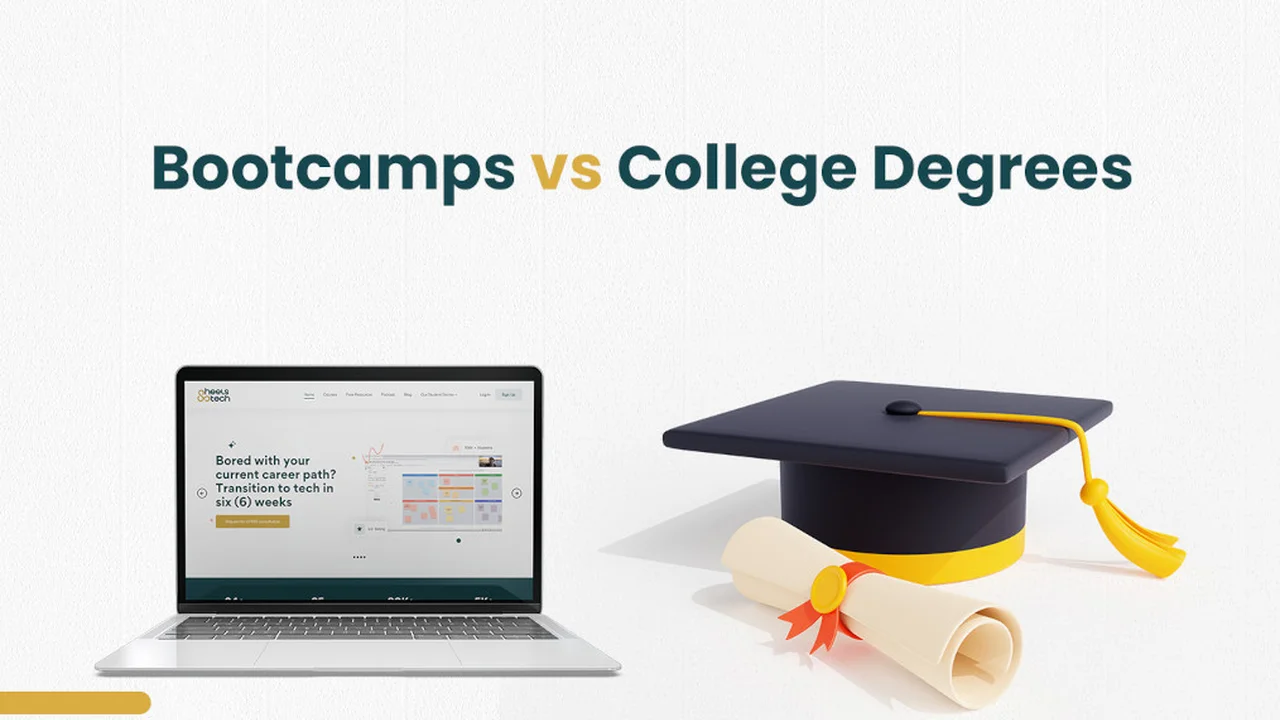
Compare online bootcamps with traditional degrees and their respective impacts on career development and job prospects.
Online Bootcamps vs Traditional Degrees Career Impact
Hey there! So, you're at a crossroads, right? You're looking to boost your career, maybe even switch fields entirely, and you've heard about online bootcamps and traditional degrees. Both promise a brighter future, but they take very different paths to get you there. It's a big decision, especially with the job market constantly evolving in places like the US and Southeast Asia. Let's dive deep into what each option offers, how they stack up against each other, and ultimately, which one might be the best fit for your career goals and lifestyle.
Understanding Online Bootcamps Fast Track Career Training
Online bootcamps are essentially intensive, short-term training programs designed to equip you with specific, in-demand skills. Think of them as a sprint rather than a marathon. They're usually focused on practical, hands-on learning, often in tech fields like web development, data science, cybersecurity, or UX/UI design. The goal? To get you job-ready in a matter of weeks or months, not years.
Key Characteristics of Online Bootcamps Skill Focus and Speed
- Duration: Typically 3 to 6 months, though some can be shorter or longer.
- Curriculum: Highly practical, project-based, and focused on current industry tools and technologies.
- Cost: Generally ranges from $5,000 to $20,000, though some offer income share agreements (ISAs) or financing options.
- Target Audience: Career changers, recent graduates looking for specialized skills, or professionals wanting to upskill quickly.
- Outcomes: Strong emphasis on job placement assistance, portfolio building, and interview preparation.
Exploring Traditional Degrees Comprehensive Academic Foundation
On the flip side, traditional degrees, whether online or on-campus, offer a more comprehensive and theoretical education. They delve into foundational knowledge, critical thinking, and a broader range of subjects beyond just job-specific skills. A bachelor's degree usually takes four years, while a master's can take one to two years. These programs are about building a deep understanding of a discipline, often with a strong academic and research component.
Key Characteristics of Traditional Degrees Depth and Breadth
- Duration: Bachelor's degrees typically 4 years, Master's 1-2 years, PhDs 4+ years.
- Curriculum: Broad academic foundation, theoretical knowledge, critical thinking, research, and often general education requirements.
- Cost: Can range from $10,000 to $60,000+ per year for tuition alone, depending on the institution and program.
- Target Audience: Students seeking a deep academic understanding, those aiming for professions requiring specific licensure (e.g., medicine, law), or individuals pursuing research or academia.
- Outcomes: Recognized credentials, broader career paths, and a foundation for further academic pursuits.
Career Impact Online Bootcamps vs Traditional Degrees Job Prospects and Earning Potential
This is where the rubber meets the road, right? How do these two paths actually affect your career? It's not a simple answer, as it really depends on your field, your goals, and what employers in your target market (like the US or Southeast Asia) are looking for.
Job Prospects and Employability Bootcamp Graduates
Bootcamp graduates often find success in entry-level to mid-level tech roles. Employers in the tech industry, especially startups and companies that prioritize practical skills, are increasingly open to hiring bootcamp grads. The focus on building a strong portfolio during the bootcamp is a huge advantage, as it allows you to showcase your abilities directly. Many bootcamps boast high job placement rates, often above 70-80%, within a few months of graduation. However, the roles might initially be more junior, and career progression might require continuous learning and upskilling.
Job Prospects and Employability Degree Holders
Traditional degree holders, especially from reputable universities, often have a broader range of job opportunities, particularly in fields that require a strong theoretical background or specific certifications (e.g., engineering, healthcare, finance, law). A degree can also be a prerequisite for certain management or leadership positions. In some traditional industries, a degree is still seen as a baseline requirement for entry. While a degree might not always guarantee a job, it often opens doors to a wider array of companies and roles, and can provide a more structured career ladder.
Earning Potential Initial Salary and Long Term Growth
Initially, bootcamp graduates can often land jobs with competitive starting salaries, especially in high-demand tech roles. For example, a junior web developer coming out of a bootcamp might start at $50,000 - $70,000 in the US, or a comparable competitive salary in major Southeast Asian tech hubs like Singapore or Jakarta. However, the long-term earning potential can sometimes be capped without further education or significant experience. Traditional degree holders, particularly those with master's or specialized bachelor's degrees, often see higher starting salaries in certain fields and can have a steeper long-term earning trajectory, especially as they move into senior management or specialized expert roles. The foundational knowledge from a degree can also make it easier to pivot to different roles within a broader industry.
Cost and Time Investment Financial and Personal Considerations
Let's talk about the practicalities: how much time and money are you really putting into this?
Bootcamp Cost and Time Efficiency
Bootcamps are significantly shorter and generally less expensive than traditional degrees. This means less time out of the workforce and a quicker return on investment. Many bootcamps offer flexible payment options, including income share agreements (ISAs) where you only pay back tuition once you land a job above a certain salary threshold. This can be a huge relief for those who can't afford upfront tuition or don't want to take on traditional student loans. However, the intensity of a bootcamp means it's often a full-time commitment, making it challenging to work simultaneously.
Traditional Degree Cost and Time Commitment
Traditional degrees, especially at universities in the US, can be a substantial financial investment, often leading to significant student loan debt. While scholarships and financial aid are available, the overall cost can be daunting. The time commitment is also much longer, meaning more years spent studying and potentially less time earning a full-time income. However, many online degree programs offer flexibility, allowing students to work part-time or full-time while studying, which can help offset costs and maintain income.
Curriculum and Learning Style Practical vs Theoretical
The way you learn and what you learn are fundamentally different between these two options.
Bootcamp Learning Experience Hands On and Project Based
Bootcamps are all about doing. You'll spend most of your time coding, designing, analyzing data, or building projects. The curriculum is constantly updated to reflect the latest industry demands. Instructors often have industry experience, bringing real-world insights into the classroom. It's a fast-paced, immersive environment that suits learners who thrive on practical application and immediate feedback.
Traditional Degree Learning Experience Foundational and Research Driven
Traditional degrees offer a more theoretical and academic approach. You'll engage in lectures, seminars, research papers, and exams. The curriculum provides a broad understanding of a subject, often including historical context, ethical considerations, and advanced theories. This approach is ideal for those who enjoy deep dives into subjects, critical analysis, and a more structured academic environment. It also builds a strong foundation for further research or specialized roles.
Specific Online Bootcamp Recommendations and Pricing
If you're leaning towards a bootcamp, here are a few highly-regarded options that have a strong presence and reputation, particularly for students in the US and those looking for remote opportunities that could extend to Southeast Asia:
1. General Assembly Web Development Immersive
- Focus: Full-stack web development (front-end and back-end).
- Duration: 12 weeks (full-time).
- Typical Cost: Around $14,950 USD.
- Key Features: Strong career services, alumni network, project-based learning, and a curriculum that adapts to industry needs. They have campuses in major US cities and offer remote options, making it accessible.
- Use Case: Ideal for career changers looking to enter the tech industry quickly with a solid foundation in web development.
2. Flatiron School Software Engineering Immersive
- Focus: Software engineering, covering languages like Ruby on Rails, JavaScript, and React.
- Duration: 15 weeks (full-time).
- Typical Cost: Around $17,000 USD.
- Key Features: Rigorous curriculum, personalized career coaching, and a strong emphasis on job placement. They also offer online programs with live instruction.
- Use Case: Great for individuals who want a deep dive into software engineering principles and practical application, with robust career support.
3. Springboard Data Science Career Track
- Focus: Data science, machine learning, and data analysis.
- Duration: 6-9 months (part-time, self-paced with mentor support).
- Typical Cost: Around $11,000 - $15,000 USD.
- Key Features: 1-on-1 mentorship, project-based learning, and a job guarantee (if you don't get a job within 6 months of graduation, you get your tuition back). This makes it a lower-risk option.
- Use Case: Perfect for those who need flexibility due to existing commitments, want personalized guidance, and are serious about a career in data science.
4. Le Wagon Web Development Bootcamp
- Focus: Full-stack web development, with a strong focus on Ruby on Rails and JavaScript.
- Duration: 9 weeks (full-time).
- Typical Cost: Varies by location, but generally around $7,000 - $8,000 USD (e.g., in Southeast Asian locations like Bali or Singapore, or European cities).
- Key Features: Global presence with campuses in many cities worldwide, including Southeast Asia. Known for a strong community and practical, intense learning.
- Use Case: Excellent for those seeking an immersive, international experience and a fast entry into web development, especially if you're in or near a Le Wagon city.
Specific Online Degree Recommendations and Pricing
For those considering a traditional online degree, here are some well-regarded programs from reputable institutions, keeping in mind the US and Southeast Asian markets:
1. Arizona State University Online Bachelor of Science in Computer Science
- Focus: Comprehensive computer science curriculum, including algorithms, data structures, software engineering, and more.
- Duration: 4 years (flexible pacing available).
- Typical Cost: Around $13,000 - $15,000 USD per year for tuition (in-state equivalent for online students, out-of-state can be higher).
- Key Features: Highly ranked program, strong academic rigor, and a recognized degree from a major US university. Offers a broad foundation for various tech roles or further graduate studies.
- Use Case: Ideal for students seeking a deep theoretical understanding of computer science, aiming for roles that require a bachelor's degree, or planning for graduate school.
2. University of Illinois Urbana-Champaign Online Master of Computer Science MCS in Data Science
- Focus: Advanced topics in data science, machine learning, statistics, and data mining.
- Duration: 2-3 years (part-time).
- Typical Cost: Around $21,000 USD for the entire program.
- Key Features: World-renowned computer science department, highly respected degree, and a flexible online format. This program is often cited as one of the best value online master's degrees.
- Use Case: Perfect for professionals with a computer science or related background looking to specialize in data science and advance into senior or leadership roles.
3. Western Governors University WGU Online Bachelor of Science in Software Development
- Focus: Practical software development skills, including programming languages, database management, and software testing.
- Duration: Competency-based, typically 2-3 years (can be faster if you accelerate).
- Typical Cost: Around $3,750 USD per 6-month term (you can complete as many courses as you can in that time).
- Key Features: Competency-based model allows you to accelerate your degree if you have prior knowledge. Accredited and recognized, with a focus on career readiness.
- Use Case: Great for self-motivated learners who want to earn a bachelor's degree efficiently and have some existing knowledge or experience in IT.
4. University of London Online Bachelor of Science in Computer Science
- Focus: Comprehensive computer science curriculum, with specializations available in areas like machine learning, web development, and data science.
- Duration: 3-6 years (flexible study).
- Typical Cost: Around £11,000 - £18,000 GBP for the entire program (approximately $14,000 - $23,000 USD), depending on your location and payment plan.
- Key Features: Delivered in collaboration with Goldsmiths, University of London. Globally recognized degree, accessible to international students, and offers a strong academic foundation.
- Use Case: Excellent for international students, including those in Southeast Asia, seeking a prestigious UK degree with flexible online study options.
Making Your Choice Aligning with Your Career Goals and Lifestyle
So, how do you decide? It really boils down to what you're looking for and where you are in your career journey.
When a Bootcamp Might Be Your Best Bet Rapid Skill Acquisition
Choose a bootcamp if you:
- Need to acquire specific, in-demand technical skills quickly.
- Are looking for a career change into a tech-related field.
- Prefer hands-on, project-based learning.
- Want to minimize time out of the workforce and get a quicker return on investment.
- Are self-motivated and can thrive in an intense, fast-paced environment.
- Are comfortable with a potentially less traditional educational background on your resume.
When a Traditional Degree Is the Way to Go Foundational Knowledge and Broad Opportunities
Opt for a traditional degree if you:
- Seek a deep, theoretical understanding of a subject.
- Are aiming for professions that require specific licensure or a degree as a prerequisite (e.g., medicine, law, certain engineering roles).
- Want a broader range of career options and a more structured career path.
- Are interested in research, academia, or leadership roles that often value a comprehensive academic background.
- Prefer a more structured, longer-term learning experience.
- Value the prestige and established recognition of a university degree.
Hybrid Approaches Combining the Best of Both Worlds
It's also worth noting that these aren't mutually exclusive paths. Many people combine them! You might get a traditional degree and then do a bootcamp to specialize in a particular tech skill. Or, you might start with a bootcamp to get into the industry, and then pursue an online master's degree a few years down the line to advance your career. The key is continuous learning, regardless of the path you choose.
Ultimately, both online bootcamps and traditional degrees offer valuable pathways to career advancement. Your decision should be based on a careful assessment of your personal circumstances, financial situation, learning style, and long-term career aspirations in the dynamic job markets of the US and Southeast Asia. Do your research, talk to alumni from both types of programs, and choose the path that feels right for you. Good luck!
:max_bytes(150000):strip_icc()/277019-baked-pork-chops-with-cream-of-mushroom-soup-DDMFS-beauty-4x3-BG-7505-5762b731cf30447d9cbbbbbf387beafa.jpg)