Online Degree ROI Return on Investment Analysis
An analysis of the return on investment (ROI) for various online degree programs. Is it worth the cost?
An analysis of the return on investment (ROI) for various online degree programs. Is it worth the cost?
Online Degree ROI Return on Investment Analysis
Hey there! Thinking about diving into an online degree program? That's a big step, and naturally, you're probably wondering, 'Is this really worth it?' You're not alone. In today's fast-paced world, investing in education, especially an online degree, is a significant decision. It's not just about the tuition fees; it's about your time, effort, and future career prospects. That's where understanding the Return on Investment (ROI) for online degrees becomes super important. We're going to break down what ROI means in the context of online education, look at how to calculate it, and explore which online degrees tend to offer the best bang for your buck, especially for folks in the US and Southeast Asia.
Understanding Online Degree ROI What Does It Mean for Your Future
So, what exactly is ROI when we talk about online degrees? Simply put, it's a way to measure the benefits you get from your investment in education compared to the costs. It’s not just about money, though that’s a huge part of it. ROI for an online degree encompasses increased earning potential, career advancement, skill development, and even personal growth. Think of it this way: you put in X amount of money and time, and you expect to get Y amount of value back. If Y is significantly greater than X, then you've got a great ROI!
The 'investment' part includes tuition, fees, books, technology, and even the income you might forgo if you reduce your work hours to study. The 'return' part includes higher salaries, promotions, new job opportunities, and the acquisition of valuable skills that make you more competitive in the job market. For many, the flexibility of online learning means they can continue working, which significantly reduces the 'forgone income' part of the investment, often leading to a better ROI compared to traditional, full-time on-campus programs.
Calculating Your Online Degree ROI A Practical Approach
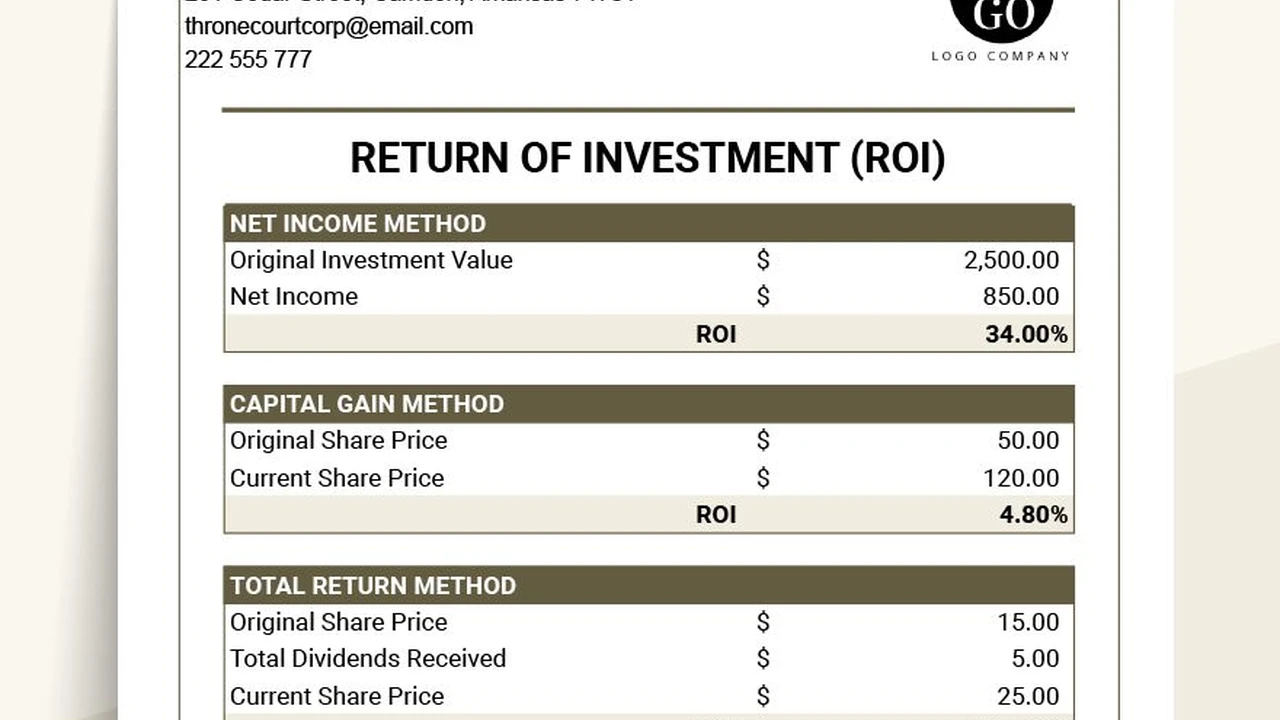
Calculating ROI isn't just for big businesses; you can do it for your education too! While it's not an exact science, having a framework helps. Here’s a simplified way to think about it:
ROI = (Monetary Benefits - Costs) / Costs * 100%
Let's break down the components:
Monetary Benefits Expected Salary Increase and Career Growth
This is the big one. Research average salaries for your desired role with and without the degree. Look at industry reports, salary aggregators like Glassdoor, Payscale, or LinkedIn Salary, and even talk to people in your target field. Consider not just your starting salary post-graduation, but also your potential earnings over a 5-10 year period. An online MBA, for instance, might lead to a significant jump in salary and management positions within a few years. For someone in Southeast Asia, an online degree from a reputable US institution might open doors to higher-paying roles in multinational corporations or even opportunities abroad.
Costs Tuition Fees Books and Hidden Expenses
This includes everything you pay out of pocket. Tuition and fees are obvious, but don't forget:
- Books and Materials: Textbooks, software licenses, online subscriptions.
- Technology: A reliable computer, good internet connection, webcam, etc.
- Opportunity Cost: If you reduce your work hours, calculate the income you're missing out on. If you're studying part-time while working full-time, this cost is minimal, which is a huge advantage of online degrees.
- Miscellaneous: Application fees, graduation fees, professional certifications taken alongside your degree.
It's crucial to get a clear breakdown of all costs from the institution. Some online programs might have technology fees or proctoring fees for exams that aren't immediately obvious.
Let's say an online Master's in Data Science costs $30,000. Before the degree, you earned $60,000 annually. After the degree, you expect to earn $80,000 annually. Your monetary benefit in the first year is $20,000. Over five years, that's $100,000. So, your ROI would be ($100,000 - $30,000) / $30,000 * 100% = 233%. That's a pretty good return!
Top Online Degrees with High ROI What to Consider
Not all degrees are created equal when it comes to ROI. Certain fields are experiencing rapid growth and high demand, leading to better returns for graduates. Here are some areas generally known for strong ROI, particularly in the US and Southeast Asian markets:
Technology and Data Science Online Degrees for Future Proof Careers
The tech sector is booming globally, and online degrees in areas like Data Science, Cybersecurity, Software Engineering, and Artificial Intelligence are highly sought after. Companies in both the US and Southeast Asia are desperate for skilled professionals in these fields. An online Master's in Data Science, for example, can lead to roles like Data Scientist, Machine Learning Engineer, or Business Intelligence Analyst, with significantly higher salaries than many other professions.
- Example Programs:
- Georgia Tech's Online Master of Science in Computer Science (OMSCS): This program is renowned for its quality and affordability. It's a rigorous program, but the ROI is exceptional due to its low cost (around $10,000 for the entire degree) and the high earning potential of its graduates. It's a fantastic option for those already in tech looking to specialize or advance.
- University of Illinois Urbana-Champaign's Online Master of Computer Science in Data Science (MCS-DS): Another top-tier program with a strong reputation. While slightly more expensive than OMSCS, it offers a focused curriculum on data science, a field with immense demand.
- University of Pennsylvania's MCIT Online (Master of Computer and Information Technology): This program is unique because it's designed for students with little to no prior computer science experience. It allows individuals from diverse backgrounds to transition into high-paying tech roles, offering a massive ROI for career changers.
Business and Management Online MBAs and Specialized Masters
An online MBA remains a powerful tool for career advancement, especially for mid-career professionals looking to move into leadership roles. Specialized master's degrees in finance, marketing analytics, or supply chain management also offer excellent returns. The skills gained are directly applicable to improving business operations and driving revenue, making graduates highly valuable.
- Example Programs:
- University of Florida's Warrington College of Business Online MBA: Consistently ranked among the top online MBA programs, it offers flexibility and a strong alumni network. The cost is competitive, and graduates often see significant salary bumps.
- Indiana University's Kelley School of Business Online MBA: Another highly respected program with a strong focus on career services and a diverse range of specializations. While pricier, the brand recognition and career outcomes often justify the investment.
- University of Massachusetts Amherst's Isenberg School of Management Online MBA: Known for its flexibility and strong faculty, Isenberg offers a solid online MBA experience that can lead to substantial career growth.
Healthcare Online Nursing and Health Administration Degrees
The healthcare sector is always in demand, and online degrees in nursing (RN to BSN, MSN) or health administration can lead to stable, well-paying careers. With an aging global population, the need for qualified healthcare professionals is only going to grow.
- Example Programs:
- University of Cincinnati's Online Master of Science in Nursing (MSN): Offers various specializations like Nurse Educator or Family Nurse Practitioner, leading to advanced practice roles with higher salaries.
- George Washington University's Online Master of Health Administration (MHA): A highly regarded program for those looking to move into leadership and management roles within healthcare organizations. The investment is significant, but the career trajectory is strong.
Factors Influencing Online Degree ROI Beyond the Numbers
While numbers are great, several qualitative factors also heavily influence your online degree's ROI:
Accreditation and Reputation The Mark of Quality
This is non-negotiable. Always choose an accredited institution. Accreditation ensures the quality of the education and that your degree will be recognized by employers and other academic institutions. A degree from a reputable university, even if online, carries more weight than one from an unknown or unaccredited institution. For US degrees, look for regional accreditation. For Southeast Asia, check local accreditation bodies and international recognition.
Career Services and Alumni Network Your Lifeline to Opportunities
Does the online program offer career counseling, job placement assistance, or an active alumni network? These resources can be invaluable for finding jobs, networking, and advancing your career. A strong alumni network can open doors you wouldn't find otherwise.
Flexibility and Work Life Balance Maximizing Your Time
One of the biggest advantages of online degrees is flexibility. If you can continue working full-time while studying, your opportunity cost is significantly reduced, directly boosting your ROI. The ability to balance work, family, and studies without relocating is a huge benefit for many.
Skill Development and Practical Application Real World Readiness
Does the curriculum focus on practical, in-demand skills? Are there opportunities for hands-on projects, internships (even virtual ones), or capstone projects? A degree that equips you with immediately applicable skills will have a higher ROI because you'll be job-ready faster.
Comparing Online Degree Platforms and Their Value
When we talk about online degrees, we're often talking about programs delivered through various platforms. While the university itself is the primary factor, the platform can influence your learning experience and sometimes even the cost structure. Here's a look at some popular platforms and how they fit into the ROI picture:
Coursera and edX University Partnerships for Accessible Degrees
These platforms partner with top universities to offer full online degrees, often at a more accessible price point than traditional on-campus programs. They're known for their structured courses, peer learning, and often, a strong focus on career-relevant skills.
- Coursera: Offers degrees from universities like the University of Illinois (MCS-DS), University of Pennsylvania (MCIT), and Imperial College London.
- edX: Partners with institutions like Georgia Tech (OMSCS), MIT, and Harvard.
Pros: Often more affordable, high-quality content from reputable universities, flexible learning pace. Many programs are designed for working professionals. The global reach of these platforms means you're learning alongside a diverse cohort, which can be a networking advantage.
Cons: Can still be rigorous and demanding. Some might miss the traditional campus experience. Support services might vary compared to direct university enrollment.
ROI Impact: Generally high, especially for the tech-focused degrees. The lower cost combined with the strong brand name of the partner universities makes these very attractive for career advancement.
University Specific Online Portals Direct Enrollment for Established Programs
Many universities run their online degree programs directly through their own learning management systems (LMS) like Canvas, Blackboard, or Moodle. These are often extensions of their traditional programs, offering the same faculty and curriculum.
- Examples: University of Florida Online, Arizona State University Online, Penn State World Campus.
Pros: Full integration with the university's resources (libraries, career services), direct access to faculty, often the same degree as on-campus. Stronger institutional support.
Cons: Can sometimes be more expensive than platform-based degrees. Less flexibility in terms of course structure compared to self-paced options.
ROI Impact: Varies greatly by university and program. A highly-ranked university's online program will likely have a strong ROI due to brand recognition and career outcomes, even if the initial investment is higher.
Bootcamps and Certifications Shorter Term Investments for Specific Skills
While not full degrees, bootcamps and professional certifications (e.g., Google IT Support Professional Certificate, AWS Certifications, PMP) offer a quicker, often cheaper way to gain specific, in-demand skills. They can be excellent for a rapid career pivot or skill upgrade.
- Examples: General Assembly, Flatiron School, Springboard (for bootcamps); Coursera Professional Certificates, edX MicroMasters (for certifications).
Pros: Fast, focused, and highly practical. Lower cost and time commitment. Often have strong career placement services for bootcamps.
Cons: Not a full degree, so may not open as many doors as a bachelor's or master's. Less theoretical depth. Quality can vary widely.
ROI Impact: Can be very high for specific career changes or skill acquisition, especially if you land a job quickly. The investment is much lower, so even a moderate salary increase can yield a great ROI. However, the ceiling for career advancement might be lower than with a full degree.
Real World Examples and Success Stories
Let's look at some hypothetical scenarios to illustrate ROI:
Scenario 1 The Career Changer
Maria, 30, works in marketing in Manila, earning $25,000 USD annually. She wants to transition into data analytics. She enrolls in an online Master's in Data Science from a US university via Coursera, costing $20,000. She continues working part-time, so her opportunity cost is minimal. After 2 years, she graduates and lands a Data Analyst role with a US-based company (remote) earning $60,000 USD annually. Her salary increased by $35,000. In less than a year, she's recouped her investment, and her long-term earning potential has skyrocketed. That's a fantastic ROI!
Scenario 2 The Mid Career Professional
David, 40, is a project manager in Singapore, earning $70,000 USD annually. He wants to move into a senior leadership role. He enrolls in an online Executive MBA from a top-tier US business school, costing $80,000. He continues working full-time. After 2.5 years, he graduates and is promoted to Director of Operations, earning $110,000 USD annually. His salary increased by $40,000. While the initial investment was higher, he recouped it in two years, and the degree positioned him for continued leadership growth and even higher future earnings. The networking opportunities alone were worth a lot.
Scenario 3 The Skill Upgrader
Siti, 28, is a web developer in Kuala Lumpur, earning $30,000 USD annually. She wants to specialize in cybersecurity. She takes an online Cybersecurity Professional Certificate program from a reputable platform, costing $3,000, over 6 months. She continues working full-time. After completing the certificate, she gets a promotion to a Cybersecurity Analyst role, earning $40,000 USD annually. Her salary increased by $10,000. She recouped her investment in just a few months, and now has a specialized skill set that makes her more valuable in the job market.
Making Your Online Degree Investment Pay Off Tips for Maximizing ROI
It's not just about choosing the right program; it's also about how you approach your online education. Here are some tips to maximize your ROI:
- Choose a High-Demand Field: Research job market trends in the US and Southeast Asia. Focus on degrees that lead to careers with strong growth projections and competitive salaries.
- Network Actively: Even in an online environment, networking is crucial. Engage with classmates, professors, and alumni. Attend virtual career fairs and industry events.
- Leverage Career Services: Don't wait until graduation. Utilize your program's career services from day one for resume reviews, interview prep, and job search strategies.
- Apply Your Learning: Look for opportunities to apply what you're learning in your current job or through personal projects. This builds your portfolio and makes you more attractive to employers.
- Negotiate Your Salary: Once you have that degree, don't be afraid to negotiate for a higher salary. Your new qualifications give you leverage.
- Consider Part-Time Study: If possible, continue working while you study. This significantly reduces the opportunity cost and makes the financial burden more manageable.
- Look for Scholarships and Financial Aid: Don't overlook grants, scholarships, and employer tuition reimbursement programs. Every dollar you don't have to pay out of pocket directly increases your ROI.
Ultimately, the ROI of an online degree is a personal calculation. It depends on your starting point, your career goals, the program you choose, and how much effort you put into leveraging your new qualifications. But with careful planning and strategic choices, an online degree can absolutely be a worthwhile investment that pays dividends for years to come.
:max_bytes(150000):strip_icc()/277019-baked-pork-chops-with-cream-of-mushroom-soup-DDMFS-beauty-4x3-BG-7505-5762b731cf30447d9cbbbbbf387beafa.jpg)